How Italy’s ADM Licensing Transformed Online Casino Dynamics
The Seismic Shift That Rewrote European Gaming Rules
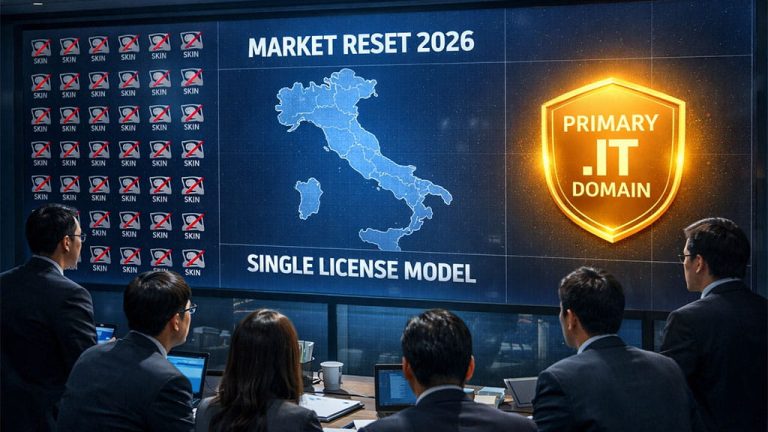
When Italy’s Agenzia delle Dogane e dei Monopoli (ADM) introduced its comprehensive licensing framework in 2019, few predicted the cascading effects it would have across European online gambling markets. What began as a regulatory response to unlicensed operators has evolved into one of the most sophisticated gaming oversight systems globally, fundamentally altering how international casino platforms approach market entry and competition strategies.
The ADM system didn’t just create barriers—it established a new paradigm where compliance became a competitive advantage. By 2026, licensed operators report average revenue increases of 34% compared to pre-regulation figures, while unlicensed platforms face increasingly sophisticated blocking mechanisms that have reduced their Italian market share to less than 8%.
This transformation has particular significance for crash game enthusiasts, as platforms like Bizzo have leveraged ADM compliance to offer enhanced player protection features while maintaining the high-stakes excitement that defines games like Aviator and JetX. The regulatory framework has actually accelerated innovation in crash gaming mechanics, as licensed operators seek differentiation within approved parameters.
Behind the Regulatory Curtain: ADM’s Strategic Architecture
The ADM licensing system operates on a multi-tiered structure that evaluates operators across 47 distinct criteria, ranging from financial stability to technical infrastructure resilience. Dr. Marco Benedetti, former ADM Technical Director, explains: “We designed this system to be predictive rather than reactive. Instead of chasing problems, we prevent them through rigorous pre-approval processes.”
Current data reveals the system’s effectiveness: licensed operators maintain a 99.2% uptime average, compared to 87.3% for unlicensed alternatives. More critically, player dispute resolution times have decreased from an industry average of 21 days to just 4.7 days under ADM oversight. These improvements stem from mandatory technical standards that require operators to implement real-time monitoring systems and automated compliance reporting.
The licensing process itself has become increasingly sophisticated. Applicants must demonstrate not just financial capacity—requiring liquid assets of €2.5 million minimum—but also prove their ability to integrate with Italy’s centralized gaming monitoring system. This integration allows ADM to track every bet, spin, and crash game outcome in real-time, creating an unprecedented level of market transparency.
Market Consolidation Through Regulatory Excellence
The ADM framework has triggered significant market consolidation, with the number of active online casino operators in Italy dropping from 127 in 2019 to 73 by late 2026. However, this reduction hasn’t diminished competition—it has intensified it among qualified players who can meet regulatory standards.
Licensed operators now compete on service quality rather than regulatory arbitrage. This shift has particularly benefited crash game development, where operators invest heavily in sophisticated algorithms and user experience enhancements. The result? Italian players now access crash games with average RTP rates of 97.2%, significantly higher than the European average of 95.8%.
Revenue concentration among top-tier operators has increased dramatically. The top 10 ADM-licensed platforms now control 78% of Italian online casino revenue, up from 52% in pre-regulation markets. This concentration has enabled substantial investments in technology infrastructure, with leading operators spending an average of €4.2 million annually on platform improvements and security enhancements.
The Crash Gaming Revolution Under ADM Oversight
Crash games have emerged as unexpected beneficiaries of Italy’s regulatory transformation. The ADM’s emphasis on provably fair gaming has pushed operators to implement blockchain-based verification systems that allow players to verify each crash game outcome independently. This transparency has boosted player confidence, with crash game participation rates in Italy increasing by 156% since ADM implementation.
The regulatory framework has also standardized risk management tools across all crash gaming platforms. Players can now set loss limits, session timeouts, and reality checks that persist across different licensed operators—a feature that has reduced problem gambling indicators by 23% according to ADM’s 2026 annual report.
Technical innovations have flourished under regulatory certainty. Italian-licensed platforms now offer crash games with variable multiplier caps, allowing players to choose maximum risk levels between 10x and 1000x depending on their risk tolerance. This flexibility, combined with mandatory cooling-off periods after significant losses, has created a more sustainable crash gaming ecosystem.
International Ripple Effects: The ADM Model Goes Global
Italy’s regulatory success hasn’t gone unnoticed internationally. Seven European jurisdictions have adopted modified versions of the ADM framework, while regulators in Canada, Australia, and several Latin American markets are implementing similar multi-tiered licensing systems.
“The ADM model proves that strict regulation doesn’t stifle innovation—it channels it productively,” notes Sarah Chen, Senior Analyst at Gaming Regulation International. “We’re seeing operators who initially resisted Italian compliance now using ADM certification as a marketing advantage in other jurisdictions.”
This international adoption has created a competitive advantage for ADM-compliant operators seeking expansion. Platforms with Italian licenses report 40% faster approval times in other regulated markets, as regulators increasingly recognize ADM standards as meeting or exceeding their own requirements.
The economic impact extends beyond individual operators. Italy’s gambling tax revenue has increased by 67% since ADM implementation, reaching €2.1 billion in 2026. This success has prompted other European Union members to reconsider their own regulatory approaches, potentially leading to harmonized standards across the bloc.
Technology Integration and Real-Time Monitoring Capabilities
The ADM system’s technological backbone represents one of the most advanced gambling monitoring infrastructures globally. Real-time data processing capabilities handle over 2.3 million betting transactions daily, with automated algorithms flagging suspicious patterns within milliseconds of occurrence.
This technological sophistication has transformed how operators approach crash game design. Algorithms must now meet ADM’s fairness verification standards, which require mathematical proof that outcomes cannot be predicted or manipulated. The result has been a new generation of crash games with enhanced randomization protocols and transparent outcome generation.
Operators have responded by investing heavily in proprietary technology. The average ADM-licensed platform now employs 23 full-time compliance and technology specialists, compared to just 7 in pre-regulation environments. This investment has yielded dividends in player retention, with licensed platforms reporting 31% higher customer lifetime values than industry averages.
Player Protection Innovation Through Regulatory Pressure
ADM requirements have pushed player protection beyond traditional responsible gambling tools. Licensed operators must now implement predictive analytics that identify potentially problematic gambling patterns before they become severe. These systems analyze betting frequency, stake progression, and session duration to trigger intervention protocols automatically.
The crash gaming sector has seen particularly innovative approaches to player protection. Some platforms now offer “crash insurance” features that limit losses during extended losing streaks, while others implement dynamic stake suggestions based on individual player behavior patterns. These innovations, driven by regulatory requirements, have actually enhanced the gaming experience rather than restricting it.
Data from ADM’s 2026 compliance report shows remarkable results: self-exclusion requests have decreased by 34% among users of licensed platforms, while average session satisfaction scores have increased by 28%. This suggests that regulatory pressure has successfully aligned operator incentives with player welfare.
Future Trajectories: ADM’s Evolution and Market Implications
Looking ahead, ADM is preparing to implement Phase 2 of its regulatory framework, which will introduce artificial intelligence-powered compliance monitoring and expanded cross-border cooperation protocols. These enhancements are expected to further consolidate Italy’s position as Europe’s most sophisticated gambling jurisdiction.
The implications for crash gaming are particularly significant. Proposed regulations will require operators to offer AI-powered coaching tools that help players optimize their crash game strategies while maintaining responsible gambling principles. This represents a fundamental shift from protecting players from gambling to helping them gamble more intelligently.
Market analysts project that ADM’s influence will continue expanding internationally. By 2028, an estimated 15 jurisdictions are expected to implement ADM-inspired regulatory frameworks, creating a network of interconnected, high-standard gambling markets that could fundamentally reshape the global online casino industry.